Testing Llama3.1 (8B) With LM Studio

MetaAI have done it again… Dropping llama3.1 under the (mostly) open source license and I have been putting it through its paces and benchmarking to find out how well it performs to models preiously tested: Testing Llama3 With LM Studio. Previously we took a look at llama3 in LM Studio which has made self hosted LLMs that rival paid services like ChatGPT and Claude possible; this time we are taking a look at llama through the lend of GPT4All. ...

28 July 2024 · 10 min · Tom
Feeding My Cat With Home Assistant

Feeding My Cat With Home Assistant

Let’s face it, cats are demanding creatures. They expect their food to be served on time, and they’re not afraid to let you know when it’s late. But what if you trigger the feeding action to our Home Assistant dashboard? In this post, we’ll explore how to use Home Assistant to control a Tuya-compatible cat feeder, ensuring your feline friend never goes hungry. Get ready to unleash the power of automation and give your cat the royal treatment they deserve! ...

3 July 2024 · 4 min · Tom Cocking
How to write Python scripts using llama3-8b and LM Studio

Using an Amazon FireHD8 as a Home Assistant Dashboard Control Panel

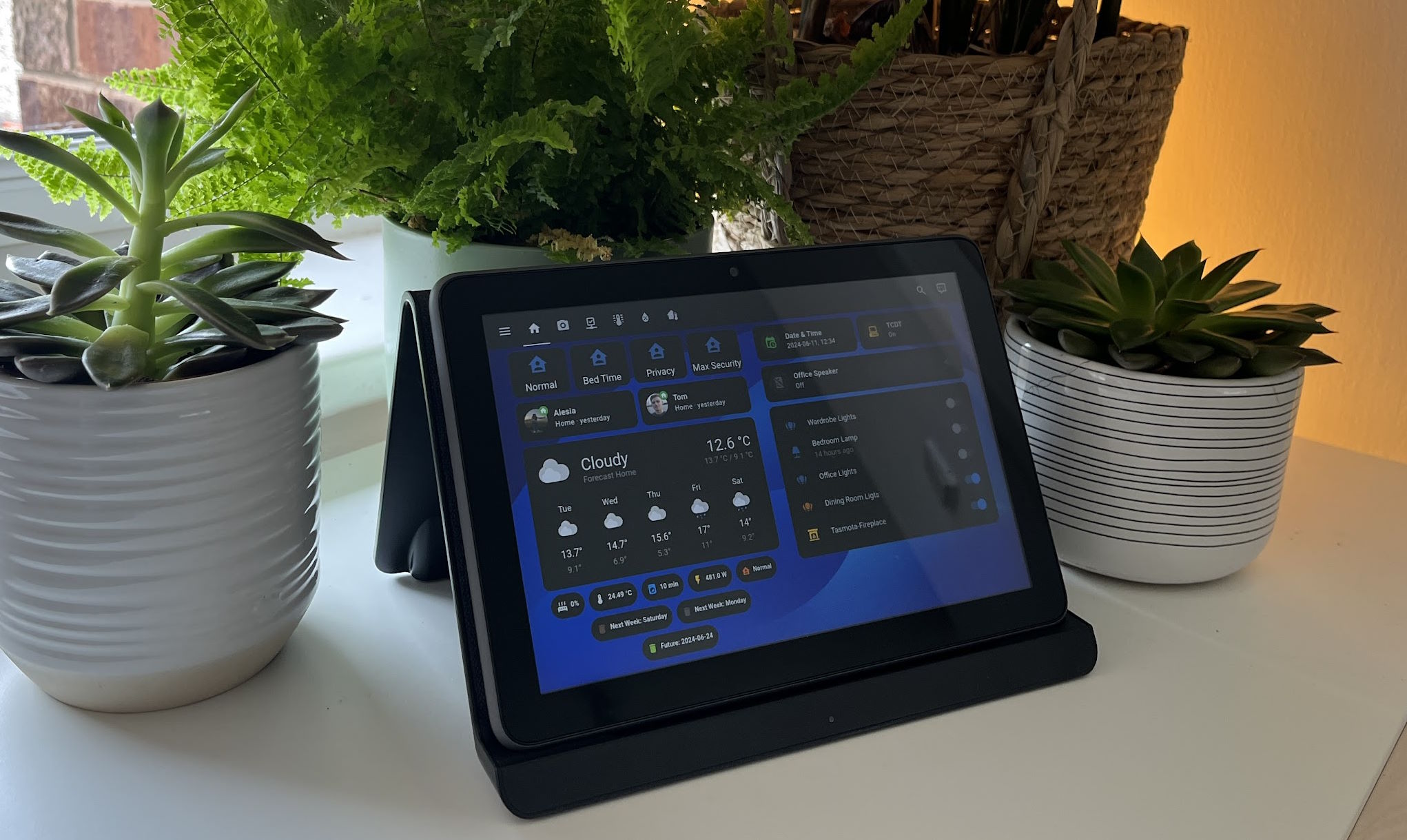
I have covered Home Assistant (HA) content a number of times in previous posts, and am I a strong advocate for this project. The home automation scene is a wash with consumer offerings, but no single silicone valley big hitter has managed to provide a fully interoperable solution; most certainly not an affordable one. Ultimately, everyone has there own idea of how home automation should work. Home Assistant doesn’t solve the problem of standards dilution, but it offers an extremely robust way to tie the wide variety of standards and products together. ...

11 June 2024 · 9 min · Tom Cocking

Testing Llama3 With LM Studio

MetaAI have just introduced Llama 3 to the world and the open source community is already putting it through its paces and pushing to find the limits of what it can produce. One fantastic tool which has made self hosted LLMs that rival paid services like ChatGPT and Claude possible is LM Studio. With version 0.2.20 they bough about support for llama 3 along with a GGUF quantized 8 billion parameter version of the model. ...

19 April 2024 · 13 min · Tom
How to generate artwork With Stable Diffusion Webui

Generating Artwork With Stable Diffusion - April 2024 Edition

As I write this, my computer’s Nvidia RTX GPU is busy converting watts into fictional images of robots and given the current cost of electricity, I am asking myself if the results it is producing are worth the resources required to produce them. In the article I hope to demonstrate how I am using AUTOMATIC1111/stable-diffusion-webui and Mikubill/sd-webui-controlnet to generate some borderline “art”. If you are looking to skip ahead to certain section, you can jump ahead using the table of contents above. ...

16 April 2024 · 15 min · Tom

Home Assistant HTTPS Certificates with Tailscale, Traefik and CoreDNS

In previous posts, I’ve explained how to use Tailscale’s MagicDNS and HTTPS certificate feature to generate a TLS cert for your Home Assistant install: Homeassistant Enable MagicDNS and HTTPS Certificates in Tailscale. That setup required you to reformat the TLS cert and copy it to the Home Assistant container… it wouldn’t be to much of a task to automate those actions, but fortunately there is now a superior method of applying and renewing a Tailscale cert for HASS (and many other self-hosted services). Let us dig in to that… ...

7 January 2024 · 6 min · Tom

Python Development in Docker Containers

Docker Compose is a powerful tool that allows developers to define and manage multi-container applications. In this blog post, we will explore a Docker Compose file for developing Python applications. Specifically, we will analyze the following Docker Compose file: version: '3' services: mypthontool: image: python:3.9 volumes: - ./:/app/ tty: true Now all that is left to do is bring the container online with docker compose up -d and access the bash terminal in the container to run our code in a repeatable environment using docker exec -it <container name> /bin/bash. ...

7 January 2024 · 4 min · Tom

Automating Postgres Deployment with Docker Compose and Init Scripts

Introduction to Running PostgreSQL in a Docker Container using Docker Compose In this blog post, we will explore how to run PostgreSQL in a Docker container using Docker Compose. We will also break down and explain the init-user-db.sh script that is executed at startup to initialize the PostgreSQL tables. Running PostgreSQL in a Docker container provides several benefits, including ease of deployment, portability, and isolation. So let’s dive in and understand the process! ...

6 January 2024 · 5 min · Tom

Setting up Wyoming Piper with Docker Compose

In previous posts I have been using Docker Compose to deploy the constituent components of a fully local Home Assistant voice assistant. In this blog post, we will guide you through setting up Wyoming Piper using Docker Compose. Piper is a fast, local neural text to speech system originally optimised for the Raspberry Pi 4. It supports many languages, and voice samples: https://rhasspy.github.io/piper-samples. Wyoming Piper is a speech recognition and natural language understanding system that can be used for voice control in various applications. It uses the Rhasspy framework and provides support for different languages and voices. ...

16 May 2023 · 3 min · Tom

How to Use a Docker Compose File for Wyoming Whisper

In this blog post, we will go over how to use a Docker Compose file to deploy and configure Wyoming Whisper. Wyoming Whisper is an open-source, lightweight voice assistant designed to run on a Raspberry Pi or other low-powered device. The impetus for this compose defined container is to intergate with a Home Assistant 2023.5 container and ultimate have a fully local voice assistant. Whisper will provide our speech-to-text service and the Wyoming protocol is how it will be integrated with Home Assistant. ...

11 May 2023 · 3 min · Tom